Aviator, created by Spribe, changed the way crash games work. The game uses a live multiplayer system where a plane takes off and a multiplier keeps rising. The goal is simple. Players must cash out before the plane flies away and the round ends.
Although the game looks easy, the mathematics behind it is important. Many players lose money because they let emotions control their decisions. Greed can make players wait too long. Fear can make players cash out too early. Because of this, a clear risk management system is necessary.
Aviator operates with a 97% Return to Player (RTP). This means the game has a fixed 3% house edge. Every round is completely independent from previous rounds. The outcome is generated by a provably fair Random Number Generator (RNG). No player can predict the next result. No player can influence the multiplier.
For that reason, success in Aviator does not come from finding secret patterns, prediction software, or signal groups. Real success comes from managing risk properly and protecting the bankroll over time.
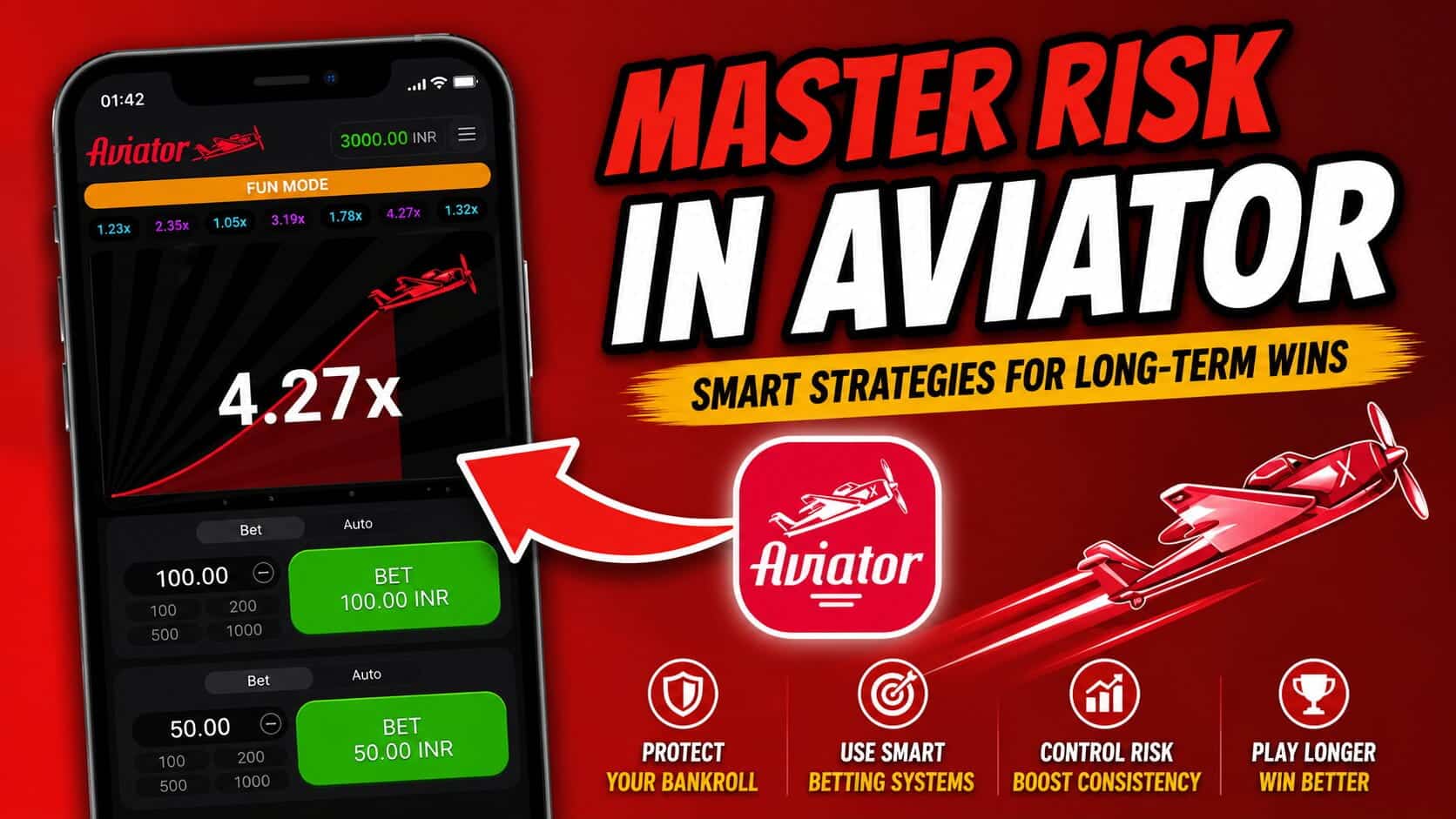
Understanding the Mathematics Behind the Crash System
A strong risk management plan starts with understanding how the multiplier system works.
In Aviator, the probability of reaching a target multiplier is calculated using the following formula:
P(m) = 0.97 / m
This formula creates an inverse relationship between the multiplier and the probability of reaching it. As the target multiplier increases, the chance of success becomes lower.
Here are some examples:
Target Multiplier: 1.20x
The probability of reaching 1.20x is approximately 80.8%.
This means the multiplier reaches 1.20x in most rounds. Because of this high success rate, many players use low cash-out targets as part of a conservative strategy.
Target Multiplier: 2.00x
The probability of reaching 2.00x is approximately 48.5%.
This is close to a coin toss. About half of the rounds will reach this level, while the other half will crash before it.
Target Multiplier: 10.00x
The probability of reaching 10.00x is approximately 9.7%.
High multipliers can generate large profits. However, they occur much less often. Therefore, relying only on large multipliers can create long losing streaks.
Another important part of the system is the instant crash event. Sometimes the multiplier crashes at exactly 1.00x. When this happens, every active bet loses immediately.
This feature is important because it can destroy aggressive betting systems. Strategies that depend on increasing bet sizes after losses can suffer significant damage during these sudden crashes.
As a result, risk management methods should always be built to survive these rare but unavoidable events.
Risk Management Strategies for Aviator
Good risk management removes emotion from the decision-making process. Instead of reacting to every round, players can use automation tools and predefined rules.
This approach creates a more structured system and reduces impulsive decisions.
1. The Dual-Bet Strategy
Aviator allows two separate bets to run on the same round. This feature can be used to create a balanced risk structure.
Bet A: The Protection Bet
The first bet uses a larger amount of money.
Many players allocate around 2% to 3% of their session bankroll to this bet.
The Auto Cash Out feature can be set to 1.50x.
When this target is reached, the return helps cover most or all of the risk from both active bets.
The purpose of this bet is stability rather than large profits.
Bet B: The Growth Bet
The second bet uses a smaller amount of money.
Many players allocate around 0.5% to 1% of the bankroll.
This bet targets higher multipliers such as 5.00x or 10.00x.
Because the stake is smaller, the financial risk remains limited. At the same time, the potential reward is much larger.
Together, these two bets create a balance between protection and growth.
2. Low-Variance Automation Strategy
Some players focus on preserving their bankroll for longer sessions.
This strategy uses lower multipliers and automated cash-out settings.
The Auto Cash Out feature can be set between 1.20x and 1.35x.
Statistically, this range provides a success rate of roughly 72% to 80%.
The profit from each win is smaller. However, the higher win frequency can help reduce large bankroll swings.
Even so, instant crashes and early busts can still occur. Therefore, players should expect occasional losing streaks.
The goal of this strategy is not fast profits. Instead, the goal is slower bankroll growth with lower overall risk.
Important Risk Control Rules
Even the best strategy can fail without proper discipline.
Every session should follow strict financial rules. These rules help protect the bankroll and prevent emotional decisions.
Session Limit
Use no more than 5% of the total gambling bankroll for a single session.
If this amount is lost, the session should end immediately.
Continuing after reaching the limit often leads to poor decisions.
Stop-Loss Rule
Set a maximum loss streak limit.
A common example is five losing rounds in a row.
Once this limit is reached, stop playing and take a break.
This cooling-off period helps prevent emotional betting.
Take-Profit Rule
Set a profit target before starting.
Many players use a target between 20% and 30% of the session bankroll.
After reaching the target, withdraw the profit and end the session.
Locking in profits helps protect gains from later losses.
Base Bet Size
Keep each bet between 1% and 2% of the current bankroll.
Avoid increasing bet sizes after losses.
A consistent bet size creates better long-term stability.
Common Mistakes and How to Fix Them
Even with a solid strategy, mistakes can still happen. Most problems come from emotions or technical issues.
Understanding these problems can help improve overall performance.
Chasing Losses and the Martingale Problem
The Problem
After several losing rounds, some players start increasing their bet sizes.
They believe a big multiplier must appear soon.
As a result, they double or triple their stakes in an attempt to recover losses quickly.
The Real Cause
This behavior is often caused by the Gambler’s Fallacy.
The Gambler’s Fallacy is the belief that previous outcomes influence future outcomes.
In reality, Aviator’s RNG does not remember past rounds.
Each round is completely independent.
A long losing streak does not increase the chance of a future win.
The Solution
Set betting amounts before the session starts.
Use automated betting tools whenever possible.
Avoid changing bet sizes during live gameplay.
This removes emotional decision-making from the process.
Manual Cash-Out Delays
The Problem
A player may click the Cash Out button at 2.10x.
However, the game server may record a crash at 2.08x before the command arrives.
The result is a loss even though the button was clicked.
The Real Cause
This issue happens because of network latency.
Data must travel between the player’s device and the game server.
Even small delays can affect timing.
The Solution
Use the Auto Cash Out feature instead of manual cash-outs for important targets.
Auto Cash Out works directly through the server system.
Because of this, it avoids delays caused by internet speed or reaction time.
Aviator Predictors and Third-Party Tools
Many players also search for Aviator predictors, signal tools, bots, or software that claim to predict the next crash point. These tools are often advertised as systems that can identify patterns and provide advance warnings before a round starts.
The reason these tools attract attention is simple. Players naturally want a way to reduce uncertainty and improve their results. As a result, Aviator Predictor software and signal services have become popular in some gaming communities.
However, it is important to understand how Aviator works. The game uses a provably fair Random Number Generator (RNG), and each round is generated independently. Previous multipliers do not affect future multipliers. Because of this, no external tool can reliably predict the exact crash point of upcoming rounds.
Even so, some players still choose to use predictor tools as part of their overall approach. They may use them for tracking historical results, monitoring multiplier trends, or organizing betting decisions. While these tools can provide additional data and statistics, they should not be viewed as guaranteed prediction systems.
Risk management should always remain the primary focus. Regardless of whether a player uses a predictor, signal service, or manual strategy, proper bankroll management, disciplined bet sizing, and strict stop-loss rules remain the most important factors for long-term sustainability.
Final Thoughts
Aviator is a game of probability, not prediction. Every round is independent, and no strategy can guarantee a win. The RNG determines all outcomes, while the house edge remains constant.
Because of this, long-term survival depends on risk management rather than guessing future results. Players who control their bankroll, use disciplined bet sizing, follow stop-loss limits, and rely on automation often create more stable sessions.
The objective is not to predict the next crash. The objective is to manage risk effectively and protect capital through both winning and losing periods.